Education in Celterra is regarded not simply as preparation for employment, but as preparation for citizenship, responsibility and life itself.
The Celterran educational tradition is unusual in that it grew from two ancient intellectual cultures: the formal, literary and civic tradition inherited from Rome, and the older Yenqua tradition of oral knowledge, observation, apprenticeship and intimate knowledge of the land.
Modern Celterran education therefore combines the classroom with the community, the written word with the spoken word, and academic study with practical experience.
A Celterran child is expected to learn how to read a book, but also how to read a landscape; how to construct a logical argument, but also how to listen; how to understand mathematics and science, but also how knowledge is remembered and transmitted between generations.
The fundamental principle is expressed in an old Celterran maxim:
“Knowledge is received, tested, remembered, and given onward.”
Education is a right of every citizen and is provided throughout the country through a network of public schools, colleges, academies, institutes and universities. Education is compulsory through the secondary level, while higher education is widely accessible through public universities and professional institutions.
THE TWO TRADITIONS
Celterra's educational philosophy is often described as having two foundations.
The Roman Foundation
The Roman contribution to Celterran education is principally concerned with the disciplined acquisition of knowledge.
From the Roman tradition came the importance attached to:
- literacy and written scholarship;
- grammar and languages;
- mathematics;
- rhetoric and public speaking;
- philosophy;
- history;
- law;
- civic responsibility;
- structured examinations;
- formal academic progression;
- the teacher as a recognised intellectual authority.
The Roman ideal of education was closely connected to the formation of the citizen. A well-educated person was expected not merely to know things, but to be capable of reasoning, speaking persuasively, participating in public life and understanding the laws and institutions of society.
These principles remain visible throughout the Celterran school system.
The Yenqua Foundation
The Yenqua tradition developed in a society in which knowledge was preserved and transmitted primarily through people rather than books.
History, genealogy, geography, customary law, navigation, weather knowledge, medicinal plants, agriculture, animal husbandry, craftsmanship and moral instruction were transmitted through story, poetry, song, repetition, demonstration and apprenticeship.
The Yenqua therefore regarded memory as a form of scholarship.
A person who could accurately remember the history of a lineage, identify landmarks across a large territory, recite customary law, recognise changes in weather or teach a craft was considered educated even if that knowledge had never been written down.
The wisdom of older people was particularly valued. Elders were not automatically considered correct, but they were considered custodians of accumulated experience. Young people were expected to listen, question, practise and eventually demonstrate that they had mastered what had been entrusted to them.
This remains an important part of Celterran education.
The principle is sometimes expressed as:
“A book remembers what one person wrote. A people remember what many generations have learned.”
EARLY CHILDHOOD
The First Years
Celterran education begins before formal schooling.
The earliest years are considered the responsibility of both the family and the community. Children learn primarily through observation, imitation, conversation, play and participation in ordinary life.
The first educational objectives are not academic.
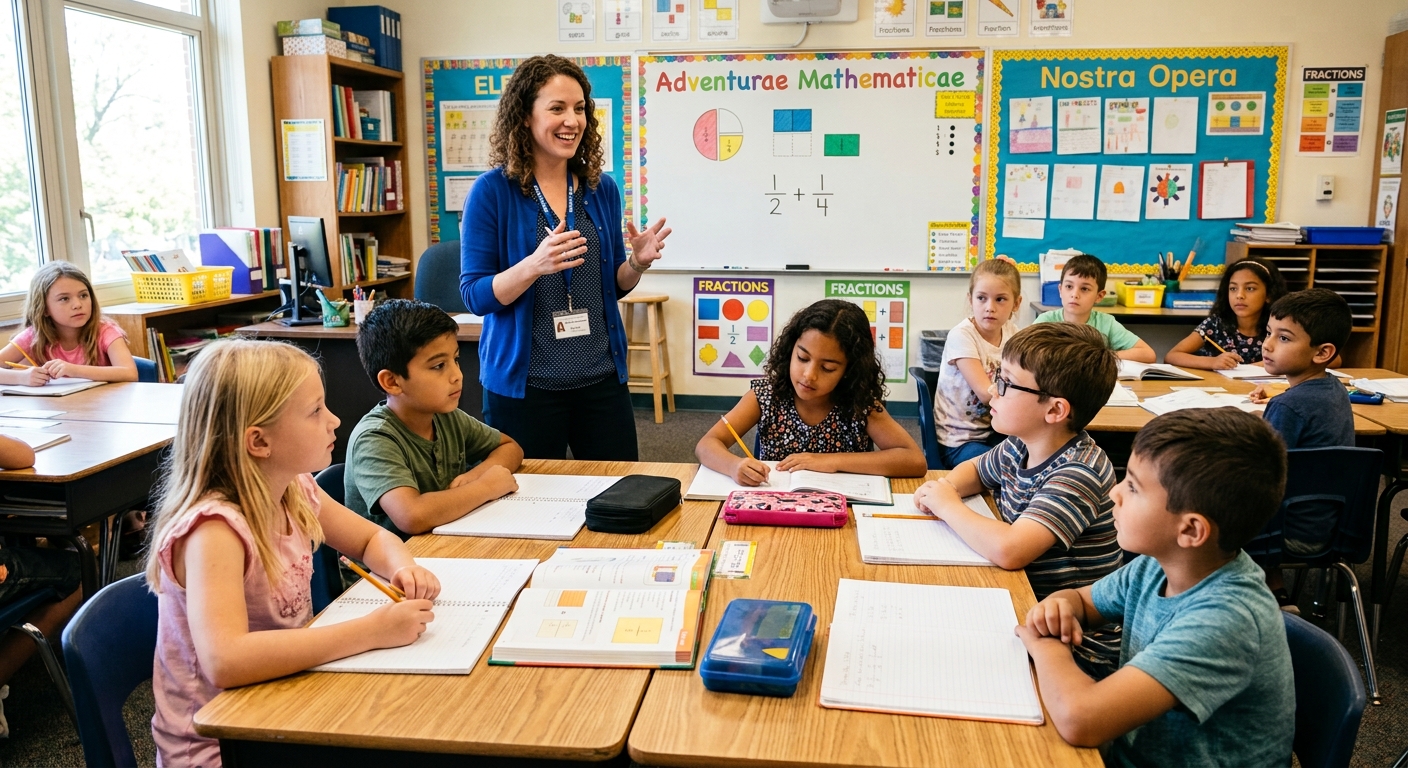
Children are taught:
language and communication; courtesy and respect; cooperation; responsibility; basic personal care; awareness of nature; songs, stories and traditional narratives; simple counting; recognition of colours, shapes and objects; curiosity and questioning.
Yenqua influence is particularly strong at this stage.
Children hear traditional stories from parents and grandparents and are encouraged to memorise short poems, songs, sayings and historical stories. They are taken outdoors and taught to recognise common plants, animals, geographical features and seasonal changes.
The intention is not to turn small children into miniature scholars; the intention is to establish the idea that learning is part of everyday life.
Primary Education
Formal schooling normally begins at approximately six years of age. Primary education lasts six years and establishes the foundations upon which later education is built.
The curriculum includes:
Language and Literature
Children learn Standard Celterran, alongside the Yenquian language where it is not already their first language.
Reading and writing are introduced systematically, while oral expression remains equally important.
Students are taught to recite poetry, tell stories and speak before groups from an early age.
Traditional Yenqua narratives are incorporated into literature lessons, while Roman and Mediterranean classics form an important part of the literary curriculum.
Mathematics
Arithmetic, geometry, measurement, patterns and practical mathematics are introduced progressively.
The Celterran approach places considerable emphasis on applying mathematics to real situations.
Children may calculate distances, areas, quantities, proportions and time while working with practical examples rather than learning mathematics exclusively as abstract exercises.
Natural Knowledge
Young students are introduced to the natural world surrounding them.
Depending upon the region, this may include:
- plants; animals; geology; weather; tides; agriculture; astronomy; freshwater and marine environments.
The Yenqua tradition of observing and remembering the natural environment remains particularly influential.
History and Memory
History begins with the child's immediate world.
Students learn about their family, locality and community before progressing to the history of Celterra.
The curriculum eventually expands to include the Yenqua peoples, the Roman influence on Celterra, the formation of the Celterran state, the development of its institutions and Celterra's relationship with the wider world.
Students are also taught how historians distinguish between memory, tradition, evidence and interpretation.
This distinction is important.
Celterra does not teach that every traditional story is necessarily literal historical fact. Students learn to respect inherited traditions while also learning how historical claims can be investigated.
Practical Education
Every primary school includes practical activities.
Gardening, basic construction, cooking, craft, environmental observation, first aid and simple maintenance may form part of the school year.
The objective is straightforward:
An educated person should not be helpless outside a classroom.
The Yenqua Method
One of the most distinctive features of Celterran education is the continued use of the Yenqua Method, particularly during childhood and adolescence.
The method consists of four stages:
Hear
The student listens to an explanation, story, demonstration or account from a teacher, elder or specialist.
Remember
The student learns the essential information without immediately relying upon written notes.
Do
The student performs the task or applies the knowledge.
Tell
The student explains what was learned to another person.
The fourth stage is considered particularly important.
A student who understands something but cannot explain it clearly has not yet demonstrated complete mastery.
This principle reflects the old Yenqua understanding that knowledge becomes stronger when it is transmitted to another person.
Modern Celterran educators combine this method with written research, laboratory work, digital resources and conventional academic instruction.
Lower Secondary Education
Around the age of twelve, students enter lower secondary education.
The curriculum becomes more demanding and specialised.
Students study:
advanced mathematics; natural sciences; history; geography; literature; languages; philosophy and ethics; civic studies; economics; arts and music; physical education; technology and practical sciences.
At this stage students also begin Field Study.
Field Study is one of the defining features of the Celterran system.
Instead of learning exclusively within school buildings, students periodically work outside them.
They may visit farms, archaeological sites, forests, coastlines, workshops, museums, government institutions, laboratories, ports or historical settlements.
A student studying geography may therefore study a coastline directly.
A student studying history may examine an archaeological site.
A student studying botany may work in the field.
A student studying architecture may measure an existing structure.
The underlying principle is ancient:
Knowledge should meet reality.
Upper Secondary Education
The final years of school are designed to prepare students for adult citizenship, employment or higher education.
Students continue a common core of studies but increasingly choose areas of concentration.
The principal pathways are:
Classical and Humanities Studies
For students interested in history, literature, languages, philosophy, law, politics and the humanities.
Scientific Studies
For mathematics, physics, chemistry, biology, medicine and related disciplines.
Technical and Applied Studies
For engineering, construction, technology, agriculture, maritime studies, manufacturing and practical sciences.
Civic and Administrative Studies
For students intending to enter public administration, law, diplomacy, economics or government.
Arts and Cultural Studies
For literature, music, visual arts, architecture, theatre, design and cultural preservation.
Vocational and Craft Studies
For skilled trades, traditional crafts, agriculture, maritime occupations, hospitality and other professions.
These pathways are not considered inferior or superior to one another.
Celterran society traditionally distinguishes between different forms of mastery rather than different levels of human worth.
A master engineer, physician, historian, navigator, architect, farmer or craftsman may all be regarded as highly educated people, provided they have achieved genuine mastery of their discipline.
The Elder and the Teacher
The Celterran system maintains a distinction between two types of educational authority.
The Teacher is the trained professional responsible for formal education.
The Elder is the recognised custodian of accumulated cultural or practical knowledge.
The two roles frequently overlap, but they are not identical.
A university professor may be an expert in Roman law but have little knowledge of traditional navigation.
An elderly fisherman may possess extraordinary knowledge of tides and coastal conditions without holding an academic degree.
Both forms of knowledge are respected.
Schools therefore maintain relationships with local cultural custodians, craftspeople, farmers, sailors, historians, artists and other specialists.
Students may learn from them through lectures, demonstrations, fieldwork and apprenticeship.
This arrangement preserves an important Yenqua principle: some knowledge cannot be acquired properly from books alone.
Apprenticeship
Apprenticeship remains an important part of Celterran education.
Students interested in practical professions may spend part of their secondary education learning directly from experienced practitioners.
An apprentice is not merely an assistant.
The apprentice observes, performs, makes mistakes, receives correction and gradually assumes greater responsibility.
Traditional apprenticeships exist alongside modern professional training.
They may include:
- metalworking; woodworking; ceramics; weaving; agriculture; shipbuilding; navigation; architecture; culinary arts; music; traditional medicine and herbal knowledge; conservation; engineering trades.
Modern safety standards and scientific knowledge apply to all apprenticeships.
The purpose of preserving the apprenticeship tradition is not to preserve old techniques unchanged, but to preserve the principle of learning through participation.
The Celterran Examination
Examinations in Celterra combine Roman academic tradition with the Yenqua emphasis on demonstration.
Students may therefore be examined in several ways.
A conventional written examination may test knowledge and reasoning.
An oral examination may test whether a student can explain a subject clearly without relying on notes.
A practical examination may require the student to perform a task.
A field examination may require the student to identify, measure, analyse or interpret something outside the classroom.
The highest level of assessment is traditionally called Demonstration of Mastery.
A student is not simply asked:
“What do you know?”
The more important question is:
“What can you do with what you know?”
Higher Education
Celterra's universities descend intellectually from the ancient Roman tradition of advanced study while incorporating the country's distinctive field-based and oral traditions.
University education is divided broadly into three stages:
Undergraduate study → Advanced study → Research
The first stage normally leads to a bachelor's-level degree or equivalent professional qualification.
Students may then continue into advanced professional or scholarly study.
Doctoral education is based primarily upon original research.
The Universities
Celterran universities are autonomous institutions responsible for teaching, research and the preservation of knowledge.
The principal faculties include:
- Medicine and Health Sciences;
- Law;
- Philosophy;
- History and Archaeology;
- Languages and Literature;
- Mathematics;
- Natural Sciences;
- Engineering;
- Architecture;
- Agriculture;
- Marine and Ocean Sciences;
- Economics and Commerce;
- Political Science and Public Administration;
- Arts and Music;
- Education;
- Environmental Sciences;
- Technology and Computing.
The oldest universities traditionally maintain faculties of Law, Philosophy, Medicine and Rhetoric, reflecting their Roman intellectual ancestry.
Newer universities tend to specialise in science, engineering, marine studies, technology and environmental research.
Rhetoric and Public Speech
One particularly Roman element has survived unusually strongly in Celterran higher education.
Students are expected to learn how to construct and defend an argument.
Public speaking is therefore taught not merely as a communication skill but as an essential component of citizenship.
University students may participate in:
- formal debates;
- public lectures;
- legal argument;
- philosophical disputation;
- political simulations;
- academic presentations;
- parliamentary exercises.
The objective is not simply to produce persuasive speakers.
Celterra considers the ability to listen to an opposing argument, identify its weaknesses, concede what is valid and respond rationally to be a mark of education.
The Oral Examination
The ancient Yenqua influence is most visible at the highest levels of education.
Certain disciplines retain formal oral examinations in which students must defend their knowledge before a panel.
In traditional form, the student enters without written material.
The panel asks questions.
The student answers.
Questions may become progressively more difficult or may deliberately challenge assumptions made in the student's earlier answers.
This is particularly common in:
- law;
- philosophy;
- history;
- languages;
- medicine;
- environmental sciences;
- education;
- anthropology;
- traditional cultural studies.
The purpose is not theatrical intimidation.
It is to establish whether the candidate actually understands the subject rather than merely remembering material for a written examination.
The University and the Community
Celterran universities are not intended to exist as isolated academic enclaves.
Every university maintains relationships with the communities surrounding it.
Students are expected to undertake some form of public or community work during their education.
This may include:
- environmental projects;
- archaeological surveys;
- public health programmes;
- literacy programmes;
- restoration of historic sites;
- assistance to rural communities;
- cultural documentation;
- scientific fieldwork;
- mentoring younger students.
This practice has an ancient Yenqua rationale: knowledge carries an obligation to the community that supports the person who possesses it.
Language Education
Celterra's multilingual heritage is reflected in its education system.
Standard Celterran is the principal language of national administration and higher education, while Yenquian is preserved and taught as a major national cultural language.
Students encounter Yenquian through language study, literature, traditional narratives, historical texts and oral performance.
In areas with strong Yenqua cultural traditions, schools may provide bilingual education.
The objective is not merely linguistic preservation.
Language is regarded as a repository of concepts, memories and ways of understanding the world.
For this reason, the loss of a language is considered the loss of a portion of national knowledge.
Libraries and Living Archives
Celterra maintains conventional libraries alongside a less conventional institution: the Living Archive.
A Living Archive is a collection of recorded oral histories, interviews, songs, genealogies, traditional knowledge, place-names, stories and local memories.
Elders and cultural custodians may be recorded telling histories in their own words.
These recordings are preserved alongside manuscripts, archaeological records, maps and academic research.
Students may therefore encounter the same historical subject through several forms of evidence:
the document, the artefact, the landscape and the memory.
They are taught to compare them rather than automatically privilege one over another.
Education and Citizenship
Celterran education has always had a civic purpose.
The Romans contributed the idea that education creates citizens capable of participating in law and government.
The Yenqua tradition contributed the idea that knowledge creates obligations towards one's community and descendants.
Together these ideas produced one of the central principles of Celterran education:
An educated person is not simply someone who knows more. An educated person is someone who can be trusted with what they know.
Students therefore learn about:
- the constitution;
- the institutions of government;
- law;
- civic responsibility;
- ethics;
- public administration;
- environmental stewardship;
- the history of Celterra;
- the responsibilities of citizenship.
Political neutrality is maintained within education, but political literacy is actively encouraged.
Students are expected to understand how their government works and how citizens can legitimately participate in it.
Education as a Lifelong Practice
Graduation does not mark the end of education in Celterran culture.
Adults may return to universities, technical institutes, libraries and community schools throughout their lives.
Professional education and retraining are widely encouraged.
Older citizens are also encouraged to teach.
This creates a continuous cycle:
the young learn from the old; the young eventually become teachers; and the knowledge of one generation becomes the inheritance of the next.
In this respect, the modern Celterran system has changed enormously from the education of antiquity while preserving one of its oldest ideas.
Education is not preparation for life.
Education is life.
Graduation
Graduation is therefore regarded as more than the awarding of a certificate.
At the conclusion of higher education, the graduate is formally recognised as having acquired a particular body of knowledge and, more importantly, the responsibility associated with possessing it.
The ceremony combines Roman and Yenqua traditions.
The Roman element is represented by formal academic dress, public speeches, the presentation of degrees and the recognition of scholarly achievement.
The Yenqua element is represented by the presence of family, community representatives and cultural custodians, and by the oral declaration made by graduates.
The graduate traditionally states:
“What I have received, I will test.
What I have learned, I will use.
What I have mastered, I will teach.
What I have inherited, I will not waste.”
The words are not a religious oath.
They are an educational and civic commitment.
The Celterran Ideal
The ultimate purpose of education in Celterra can therefore be reduced to four ancient virtues:
Knowledge
To seek understanding of the world.
Wisdom
To understand how knowledge should be used.
Mastery
To turn knowledge into ability.
Responsibility
To use that ability for oneself, one's community and future generations.
The Roman tradition taught Celterra to value the written word, reason, law and disciplined scholarship.
The Yenqua tradition taught it to value memory, observation, experience, oral knowledge and the wisdom accumulated by generations.
Modern Celterra does not choose between them.
It considers both necessary.
The book teaches what has been recorded.
The land teaches what must be observed.
The elder teaches what must be remembered.
The teacher teaches how to understand it.
And the student must ultimately learn what to do with it.